
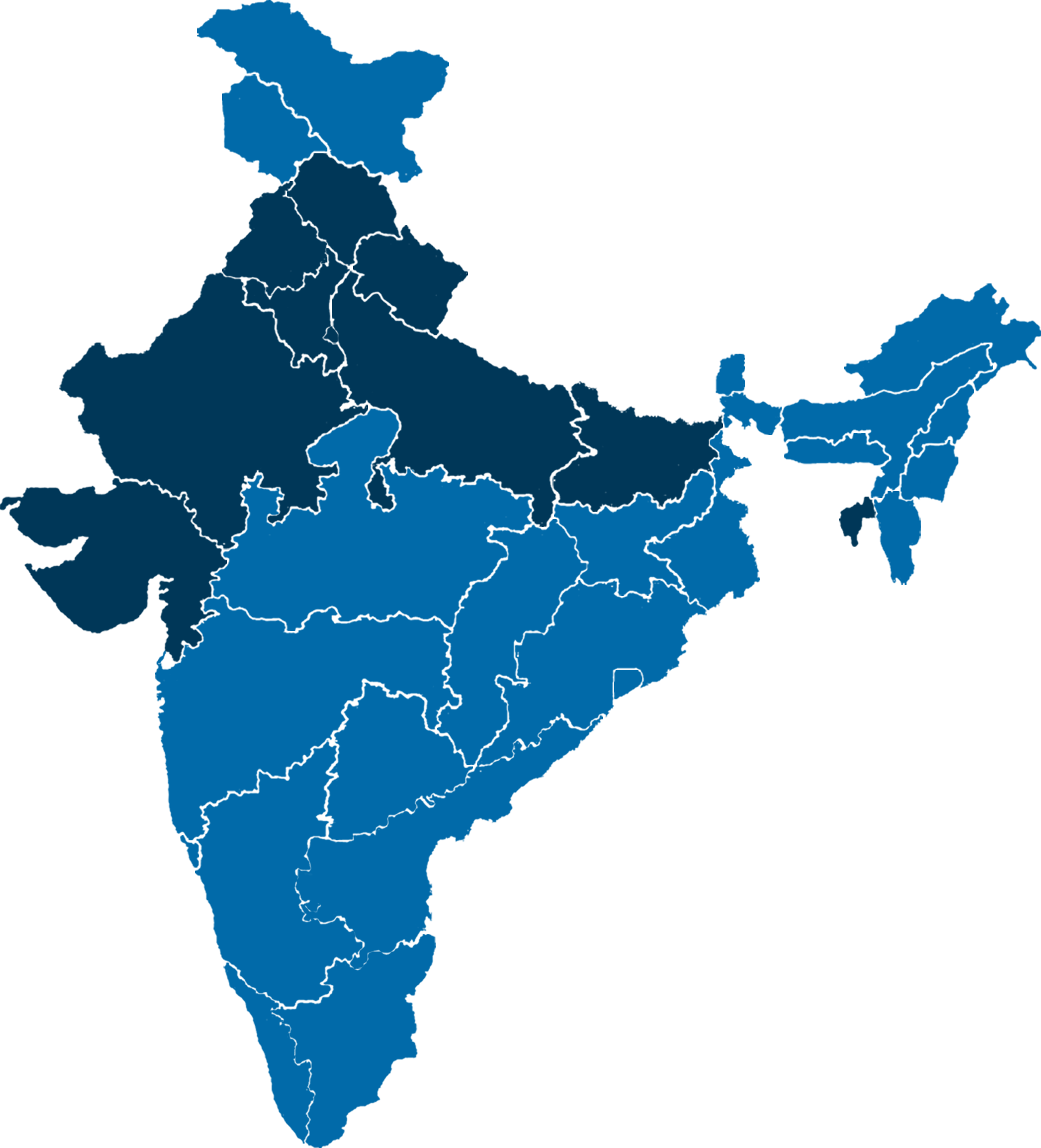

Lucknow Assembly Constituency Report: The Complete 2027 Guide
A comprehensive deep dive into the capital's political landscape — covering all 9 assembly segments, caste math, urban-rural divides, and booth-level winning strategies.
Why the Lucknow Constituency is the Ultimate Political Capital

Lucknow is not just the administrative capital of Uttar Pradesh; it is the political heart of the state. A comprehensive Lucknow Assembly Constituency Report is essential for understanding the pulse of the state's urban and semi-urban voters. With 9 assembly seats, the district offers a fascinating study of contrasts.
From the high-stakes urban battles in Lucknow Cantt and Lucknow Central to the semi-rural dynamics of Sarojini Nagar and Mohanlalganj, the data tells a story of shifting caste coalitions and evolving voter aspirations. Unlike the rest of UP, where elections are heavily rural, Lucknow is an urban and semi-urban battleground. Here, issues like infrastructure, traffic, women's safety, and employment often overshadow traditional caste-based rallies.
In this detailed guide, we break down the 9 seats, analyze the caste arithmetic, review historical election data, and reveal how booth-level data can be the difference between victory and defeat in the 2027 Assembly elections.
Lucknow Assembly Constituency Report: An Overview
Why the capital district is a must-win for any party.
Lucknow district comprises 9 assembly constituencies, spread across urban, semi-urban, and rural areas. The BJP has historically dominated this district, winning all 9 seats in 2017 and 8 out of 9 in 2022. However, the 2024 Lok Sabha results showed a slight dip in the BJP's urban vote share, making a fresh Lucknow Assembly Constituency Report critical for 2027.
The district is characterized by a high literacy rate, a significant service-sector workforce, and a large student population. These factors make the voters here highly responsive to issues like infrastructure, employment, law and order, and women's safety. The urban voter in Gomti Nagar or Aliganj has different priorities than the rural voter in Kakori or Itaunja.
Urban Dominance
Seats like Lucknow Cantt and Lucknow East are heavily urbanized, with a high concentration of upper-caste and trading community voters. Development and civic amenities are the primary deciding factors here.
Rural Contrast
Seats like Mohanlalganj and Bakshi Ka Talab have a strong rural influence, where agrarian distress, canal water disputes, and Dalit-Yadav equations play a major role in the final outcome.
The 9 Constituencies of Lucknow District
A quick breakdown of the seats that make up the capital.
A thorough Lucknow Assembly Constituency Report must map the unique identity of each of the 9 segments. Let's break them down based on their geography and political character:
| Constituency | Type | 2022 Winner (Party) |
|---|---|---|
| Lucknow Cantt | Urban | BJP |
| Lucknow Central | Urban | SP |
| Lucknow East | Urban | BJP |
| Lucknow North | Urban | BJP |
| Lucknow West | Urban | BJP |
| Sarojini Nagar | Semi-Urban | BJP |
| Bakshi Ka Talab | Semi-Rural | BJP |
| Mohanlalganj | Rural (SC) | BJP |
| Malihabad | Rural | BJP |
Deep Dive into Key Battlegrounds
- Lucknow Cantt: Traditionally a BJP fortress, but saw a tough fight in 2022. It has a massive urban population, including retired defense personnel, bureaucrats, and business families. Civic issues like stray dogs, garbage disposal, and local infrastructure dominate the narrative here.
- Lucknow Central: This is the most interesting seat in the district. The SP's victory in 2022 was a major upset. A Lucknow Assembly Constituency Report reveals that the SP capitalized on a strong consolidation of Muslim and Yadav voters in the old city areas (Chowk, Aminabad), combined with a split in the non-Yadav OBC vote. To win it back, the BJP must carefully analyze booth-level data to find where its core votes leaked.
- Mohanlalganj (SC): This is a reserved constituency with a strong rural flavor. The Dalit vote (especially Jatavs) and the Yadav vote are decisive here. The BSP's decline has directly benefited both the BJP and the SP in this region. Local candidate selection and ground-level caste alliances are critical here.
Caste Arithmetic & Demographics
How the social fabric of Lucknow dictates election results.
Lucknow is often perceived as a cosmopolitan city, but caste math remains the underlying algorithm of its politics. A deep Lucknow Assembly Constituency Report reveals a complex social mosaic that changes dramatically from the old city to the new city (Gomti Nagar).
- Upper Castes (Brahmins & Rajputs): Form a significant chunk of the urban vote. They have traditionally been the backbone of the BJP's support base in Lucknow. Their turnout often dictates the margin of victory in seats like Cantt and East.
- Muslims: Comprise around 25-30% of the district's population. They are heavily concentrated in areas like Chowk, Aminabad, and parts of Lucknow Central. They largely consolidate behind the SP or Congress, acting as a powerful veto bloc in central Lucknow.
- Yadavs & Other OBCs: A substantial portion of the electorate. While Yadavs lean toward the SP, non-Yadav OBCs (like Kurmis and Mauryas) have been heavily cultivated by the BJP through welfare schemes like free ration and Ujjwala.
- Dalits: A major factor in reserved seats like Mohanlalganj. The Jatav community historically voted BSP, but recent trends show a massive shift toward the BJP, particularly among non-Jatav Dalits who feel empowered by the current state government.
Urban vs. Rural Voting Patterns
The two different elections happening within the same district.
One of the most interesting insights from any Lucknow Assembly Constituency Report is the stark difference between how urban and rural voters behave. You cannot run the same campaign for both.
Urban voters (in seats like Cantt, North, and East) show higher participation in national narratives. They vote heavily on issues of infrastructure, security, and national prestige. The turnout is often lower in posh urban colonies (like Mahanagar or Gomti Nagar) compared to rural areas, as voters feel less direct dependency on local politicians for basic needs.
Rural voters (in Mohanlalganj, Kakori, and Bakshi Ka Talab) are driven by local issues—crop prices, canal water, and village-level caste dynamics. In these areas, the candidate's personal accessibility and the booth-level presence of party workers play a massive role. A winning strategy requires entirely different messaging for these two zones. While an urban rally might focus on 'Smart City' development, a rural rally must focus on 'Mandi' prices and 'Kisan Samman Nidhi'.
Historical Election Trends (2017-2022)
How the political landscape of Lucknow has evolved.
To predict 2027, we must look at the past. A data-driven Lucknow Assembly Constituency Report tracks the seat-by-seat performance of parties over the last two election cycles.
| Year | BJP Seats Won | SP Seats Won | BSP Seats Won | Key Takeaway |
|---|---|---|---|---|
| 2017 | 9 / 9 | 0 | 0 | BJP wave swept urban and rural Lucknow completely. |
| 2022 | 8 / 9 | 1 (Central) | 0 | SP made a comeback in the old city. BSP completely vanished from the board. |
The 2022 result is a warning sign for any incumbent. While the BJP held onto its urban strongholds, the margin of victory in seats like Cantt and Sarojini Nagar decreased significantly. The BSP's vote share collapsed, transferring directly to the SP and BJP. Any future Lucknow Assembly Constituency Report must track where this floating vote goes in 2027.
MLA Performance & Anti-Incumbency
Local performance often overrides national waves.
A comprehensive Lucknow Assembly Constituency Report must include an evaluation of the sitting MLAs. In a highly educated city like Lucknow, voters are quick to punish MLAs who are inaccessible or fail to solve civic issues like drainage, traffic, and stray dog menaces.
For example, the close contest in Lucknow Cantt during the 2022 elections highlighted significant anti-incumbency against the sitting MLA, forcing the party to deploy heavy resources to retain the seat. Conversely, an MLA who maintains a strong public presence and resolves local grievances can survive an overarching state-level anti-incumbency wave.
By analyzing booth-level swing data, parties can identify exactly which neighborhoods are unhappy with their sitting MLA. This allows the party high command to either replace the candidate or design a targeted campaign to address the grievances before the 2027 elections. For a deeper look into how this data is compiled across the state, refer to our Assembly Data Analysis Reports.
Lucknow Election FAQs
What is a Lucknow Assembly Constituency Report?
It is a detailed, seat-specific analytical document breaking down the electoral history, caste demographics, booth-level performance, and infrastructure of the 9 assembly seats in Lucknow.
How many assembly constituencies are there in Lucknow?
Lucknow district has 9 assembly constituencies: Lucknow West, Lucknow North, Lucknow East, Lucknow Central, Lucknow Cantt, Bakshi Ka Talab, Mohanlalganj, Sarojini Nagar, and Malihabad.
Why is a Lucknow Assembly Constituency Report important?
As the capital of Uttar Pradesh, Lucknow sets the political narrative for the state. Analyzing booth-level data, caste math, and urban-rural splits here is crucial for winning the 2027 elections.
Which party dominates Lucknow assembly elections?
Historically, the BJP has dominated urban Lucknow seats, winning all 9 seats in 2017 and 8 out of 9 in 2022, largely due to strong urban infrastructure narratives and upper-caste/non-Yadav OBC consolidation.
What are the major issues in Lucknow elections?
Urban seats focus on infrastructure, traffic, women's safety, and employment. Rural seats like Mohanlalganj focus on agrarian distress, canal water, and local caste dynamics.
Get Your Lucknow Constituency Report Today
Booth-level and panchayat-level election analytics for all 9 assembly seats in Lucknow — graded and mapped to a clear action plan.